I. Course Introduction
This course is among the first batch of recognized National First-Class Undergraduate Courses (online). As a compulsory course for Electrical Engineering and Automation majors, it requires students to master the basic concepts, models and calculation methods of power systems, laying a solid foundation for subsequent power system-related courses and professional work. The course covers three traditional classic parts of power system analysis: steady-state analysis, electromagnetic transient analysis and stability analysis.
It is suitable for students majoring in Electrical Engineering and Automation and related disciplines, social workers engaged in power engineering, as well as teachers as online resources for blended teaching.
II. Course Features
(1) Adapt to MOOC Characteristics and Give Play to Online Teaching Advantages
The course is produced through on-site classroom recording of physical classes plus post-editing, but it is by no means a simple copy of traditional classrooms. The teaching videos include a large number of guided teacher-student interactive questioning sessions, allowing MOOC learners in front of the screen to experience a real classroom atmosphere. The teaching videos of each knowledge point are reasonably divided to maintain the independence and integrity of each video unit, adapting to the learning needs of learners with different foundations and backgrounds. It emphasizes in-depth and step-by-step explanations of each knowledge point to make learning engaging and enhance learning enthusiasm. Great importance is attached to course discussions, guiding students to conduct in-depth thinking during online discussions.
(2) Optimize the Course System and Strengthen the Connection Between Theory and Practice
The course has systematically sorted out the knowledge points, forming 20 teaching themes. In addition to the traditional teaching content of power system analysis, it also integrates the latest scientific research progress (such as the application of big data and artificial intelligence in power systems) into teaching links in the form of inquiry-based learning. A large number of analytical questions based on practical engineering problems are also included in the course assignments.
(3) Emphasize Basic Concepts and Improve Problem-Analysis Ability
The course focuses on explaining basic concepts, principles and methods, and clarifying physical concepts and processes. It abandons the routine teaching that emphasizes calculation over analysis, and highlights the cultivation of problem-analysis ability. Solid basic concepts and training in analytical ability help students improve their ability to solve complex engineering problems.
(4) Integrate Ideological and Political Elements to Guide Students to Aspire to High Goals
The course organically integrates ideological and political elements into professional teaching, focusing on guidance at the methodological and goal levels. For example, when teaching models, it first explains the goals and significance of component modeling for power systems, and then extends to the importance of learning goals in university.
III. Teaching Effect
1. Application in the University
Before launching on China University MOOC, the course was first run on the university's undergraduate course platform, and flipped classroom teaching reform was carried out. After its launch, more than 300 students from all 8 physical teaching classes of the university adopted blended teaching combining classroom lectures and MOOC. The specific application methods are as follows:
Teachers assign pre-class questions and require students to conduct independent online learning based on MOOC. Key content is taught in class, with problem discussions and expansions carried out under the teacher's guidance.
Some relatively independent knowledge points (such as Park transformation, transient process of three-phase short circuit of synchronous generators, etc.) are taught through students' online learning and consolidation through assignments.
MOOC provides effective independent learning resources for students, serving as a powerful supplement to classroom teaching, stimulating students' autonomy and improving learning effects.
2. Application in External Institutions
According to official data from China University MOOC, the course currently has participants from more than 300 universities. These include many "211" and "985" institutions such as Tsinghua University, Zhejiang University, Xi'an Jiaotong University and Harbin Institute of Technology, as well as foreign universities such as the University of New South Wales, the University of Southampton and the University of Birmingham.
As a basic course that engineering and technical personnel in the electrical engineering field need to master, a large number of social learners discuss in the course discussion area. Known social learners mainly come from units such as State Grid Corporation of China, China Southern Power Grid Corporation and China General Nuclear Power Group.
3. Course Evaluations
The course has been offered for 6 consecutive semesters on China University MOOC, with more than 60,000 registrations. Nearly 500 learners have given a comprehensive rating of 4.9 out of 5 points. Some comments are as follows:
"It's great that the teacher guides students to think and learn through questions!"
"Teacher Liangliang's guidance at the methodological level in teaching is very successful, reflecting some philosophical ideas."
"Key points are explained clearly and easily understood—I want to learn more and more. The teacher is patient in answering questions, making everything clear."
"I graduated with an electrical major and have been working for many years. I forgot some professional knowledge, so I came back to learn. I found that university classrooms keep pace with the times. I will choose more courses in the future to recharge with questions."
IV. The Role of the Course During the COVID-19 Pandemic
With the development of the pandemic, universities across the country faced online teaching, and students also encountered great difficulties in purchasing textbooks. Professor Wu Junyong from the course team held urgent consultations with Tsinghua University Press and opened the electronic version of the new edition of "Power System Analysis" which he edited. The course team released the textbook information on China University MOOC, allowing students from universities across the country to read the textbook online for free after real-name registration. This move brought great convenience to students. Professor Wu Junyong said: "It doesn't matter if we sell a few fewer books—knowledge is priceless, and we should put the overall situation first amid the pandemic!"
What was opened was more than just the textbook. The course team not only launched the online open course on China University MOOC ahead of schedule, but nearly 50 universities also adopted their MOOC as the online SPOC classroom for internal use. Hao Liangliang also opened his Tencent Online Classroom. President Wang Jiaqiong attended his first class and communicated with nearly 300 students from inside and outside the university during the break. The number of live and on-demand viewers for each online live class exceeded 300, reaching more than 500 at the peak. The course team also specially set up a QQ group to answer questions for off-campus students, responding to everyone's questions regularly every day. Now the group has nearly 300 off-campus students. Under the guidance of the course team teachers, the QQ group has become a vibrant second classroom for mutual assistance and enthusiastic discussions. Many students are from less prestigious universities, and the teachers encourage them that "heroes are not judged by their origins" and that everyone has the opportunity to "turn the tables" through hard work. The students were greatly inspired and became more motivated to learn.
V. Course Link
https://www.icourse163.org/course/NJTU-1003359009
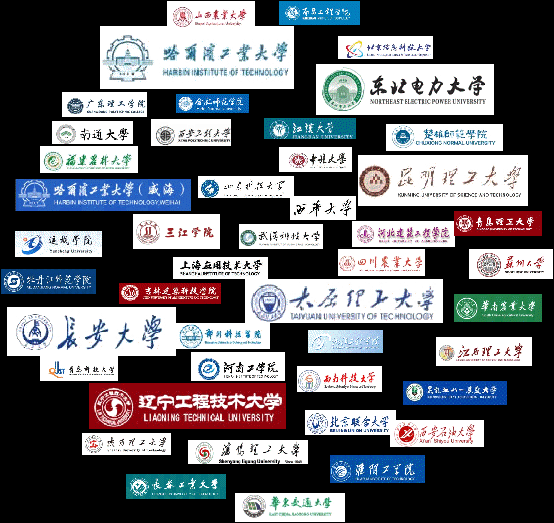
Universities that adopt this course as SPOC resources
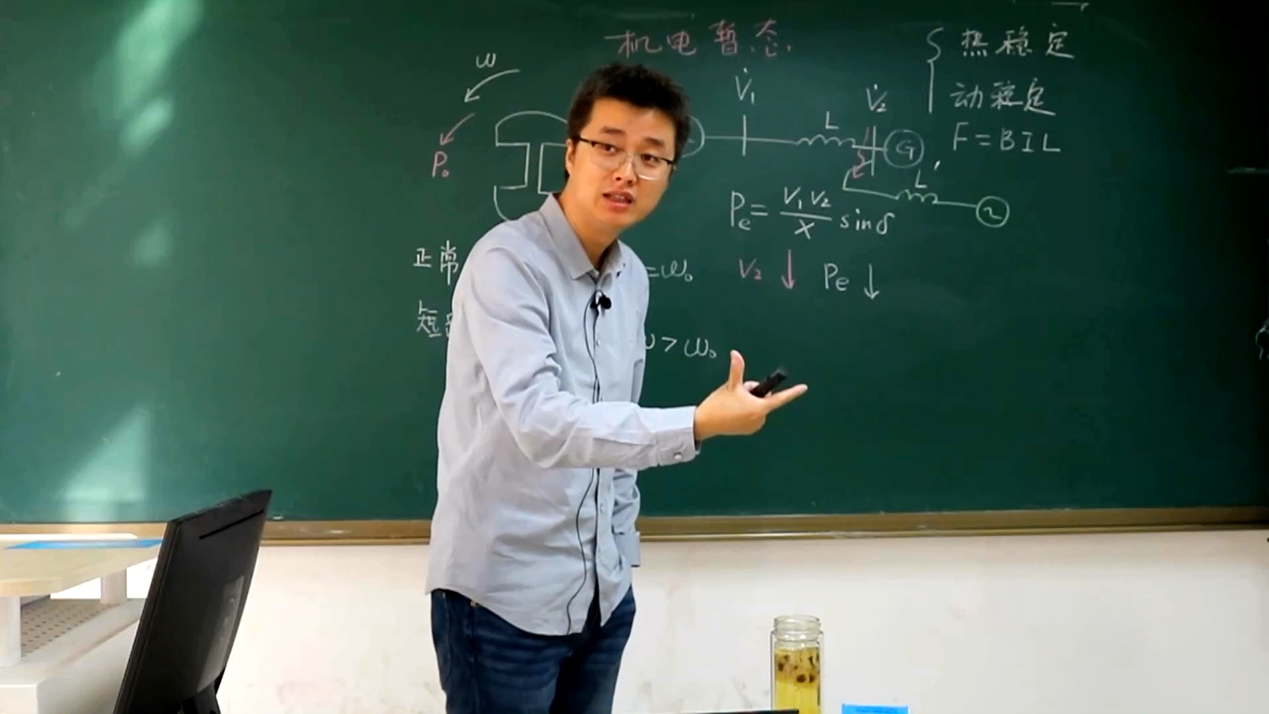
Teaching Scene


